

English Grammar Tests
1.2.1 by Eductify (0 Reviews) August 20, 2024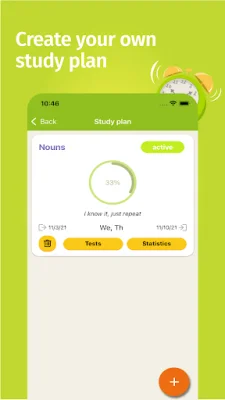

Latest Version
1.2.1
August 20, 2024
Eductify
Education
Android
0
Free
com.holucent.grammarf
Report a Problem
More About English Grammar Tests
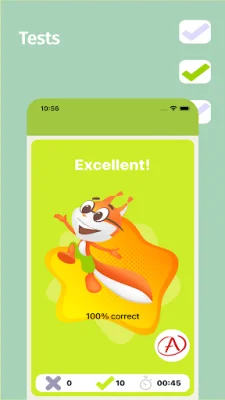
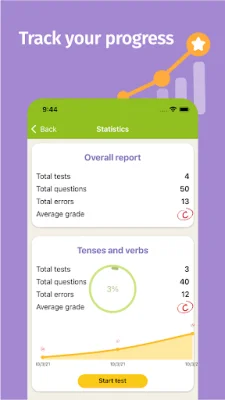
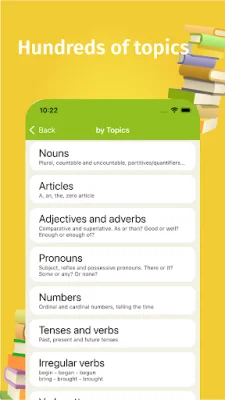
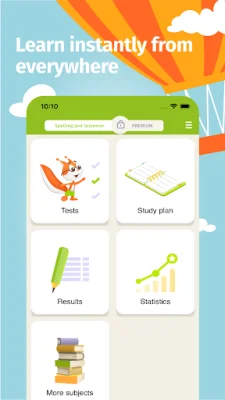
This application is designed to help users improve their understanding and usage of various aspects of the English language. It covers a wide range of topics including nouns, articles, adjectives and adverbs, pronouns, tenses and verbs, irregular verbs, verb patterns, questions, auxiliary and phrasal verbs, word order, reported speech, prepositions, word formation, idiomatic expressions, and clauses and conjunctions. By using this application, users can create a personalized study plan, track their progress and statistics, and see their results.
The section on nouns covers both plural and singular nouns, as well as countable and uncountable nouns. It also includes information on partitives and quantifiers, which are words used to express quantity or amount. The articles section discusses the different types of articles (a, an, the, and zero article) and when to use them. The adjectives and adverbs section covers comparative and superlative forms, as well as common confusions such as using "as" or "than," "good" or "well," and "enough" or "enough of."
The pronouns section includes subject, reflexive, and possessive pronouns, as well as common mistakes such as using "there" or "it," "some" or "any," and "or" or "none." The tenses and verbs section covers past, present, and future tenses, as well as common irregular verbs such as "begin," "bring," and "begin." It also discusses verb patterns, such as verbs followed by a to-infinitive or by -ing/gerund.
The application also covers questions, auxiliary and phrasal verbs, including question tags, indirect questions, and verbs with prepositions. The word order section discusses the correct order of words in sentences. The section on reported speech explains how to use indirect speech and how to change tenses when reporting what someone else has said.
In addition, the application covers prepositions, including time and place prepositions such as "at," "on," and "in." It also discusses common confusions such as "until" or "by" and verbs that are commonly used with prepositions. The word formation section covers prefixes and suffixes, such as "in" or "im" and "ible" or "able," as well as compound words. The section on idiomatic expressions includes idioms, similes, proverbs, and binomials.
Lastly, the application covers clauses and conjunctions, including conditional and wish clauses. It also provides users with the option to try online tests on the website https://www.eductify.com/ to further practice and improve their understanding of the English language. With its comprehensive coverage and user-friendly features, this application is a valuable tool for anyone looking to improve their English language skills.
Rate the App














Popular Apps