
Hydrogen Atom Orbitals
1.2.1 by Voladd (0 Reviews) December 20, 2025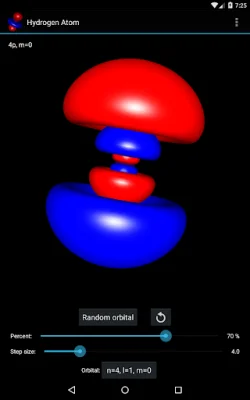
Latest Version
1.2.1
December 20, 2025
Voladd
Education
Android
0
Free
com.vlvolad.hydrogenatom
Report a Problem
More About Hydrogen Atom Orbitals
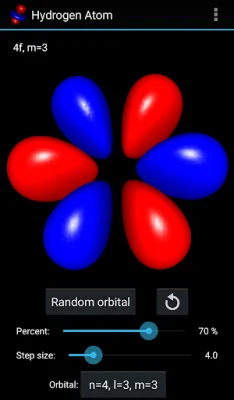
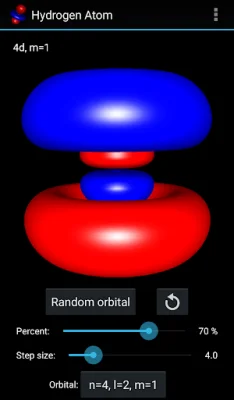
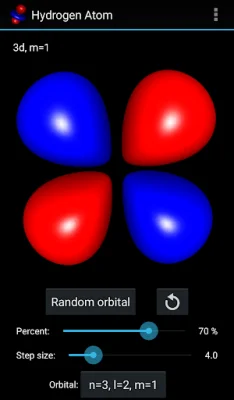
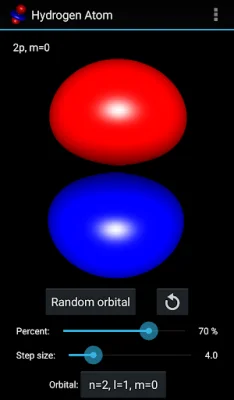
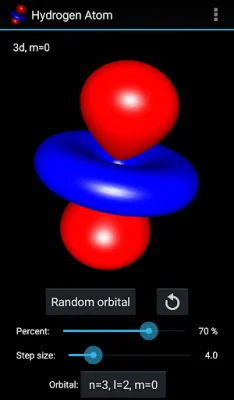
This app is a visualization tool that allows users to see the electron orbitals of the hydrogen atom in a 3D format. It utilizes OpenGL and the Marching Cubes algorithm to draw the cross-section surfaces of the electron probability density. This provides a unique and interactive way to understand the complex structure of the hydrogen atom.
The app offers several features to enhance the user experience. Users can select a specific electron orbital to visualize by inputting the quantum number n, l, and m. Alternatively, they can choose a random orbital to explore. Additionally, users have the option to adjust the discretization step size, allowing for a more detailed or simplified view of the orbital.
One of the unique features of this app is the ability to choose the total probability of finding an electron inside the drawn orbital surface. This allows users to customize their experience and focus on specific areas of interest within the orbital. Furthermore, users can zoom and rotate the orbital using their fingers, providing a hands-on and immersive experience.
The source code for this app is available under the MIT License, making it accessible for others to use and modify. This encourages collaboration and innovation within the scientific community. By providing the source code, the creators of this app hope to inspire others to build upon their work and continue to advance our understanding of the hydrogen atom.
In addition to its scientific value, this app also aims to be user-friendly and visually appealing. By utilizing 3D graphics and interactive features, it makes the complex concepts of electron orbitals more accessible and engaging for users. Whether you are a student, researcher, or simply curious about the world of atoms, this app offers a unique and informative experience.
Rate the App













Popular Apps